
What Happens If You Buy a NYC House With an Illegal Basement Apartment?
If you bought a NYC house and learned the basement unit was never legal, the short answer is this: the violation is now yours to resolve, even though you did not build the apartment. The Department of Buildings (DOB) enforces against whoever owns the property today. That feels unfair, but it does not mean you are out of options. There is a process, and acting early is what protects you.
This is one of the most common situations we see at Nacmias Law Firm. Here is what to expect and what to do about it.
How the Problem Usually Surfaces
Most homeowners do not discover an illegal basement apartment on closing day. It surfaces later, often in one of three ways.
- A 311 complaint. A neighbor, a former tenant, or a passerby files a complaint about an apartment that should not exist. The complaint routes to the DOB.
- A Notice to Inspect. The DOB sends a notice asking for access to the property to verify the condition. This frequently follows a 311 complaint.
- A title or permit search. You, your attorney, or a lender pulls the certificate of occupancy (CofO) and the permit history and finds the basement was never approved for residential use.
Once the DOB confirms an unpermitted dwelling unit, it issues a violation.
Why You Are Liable for Something You Did Not Build
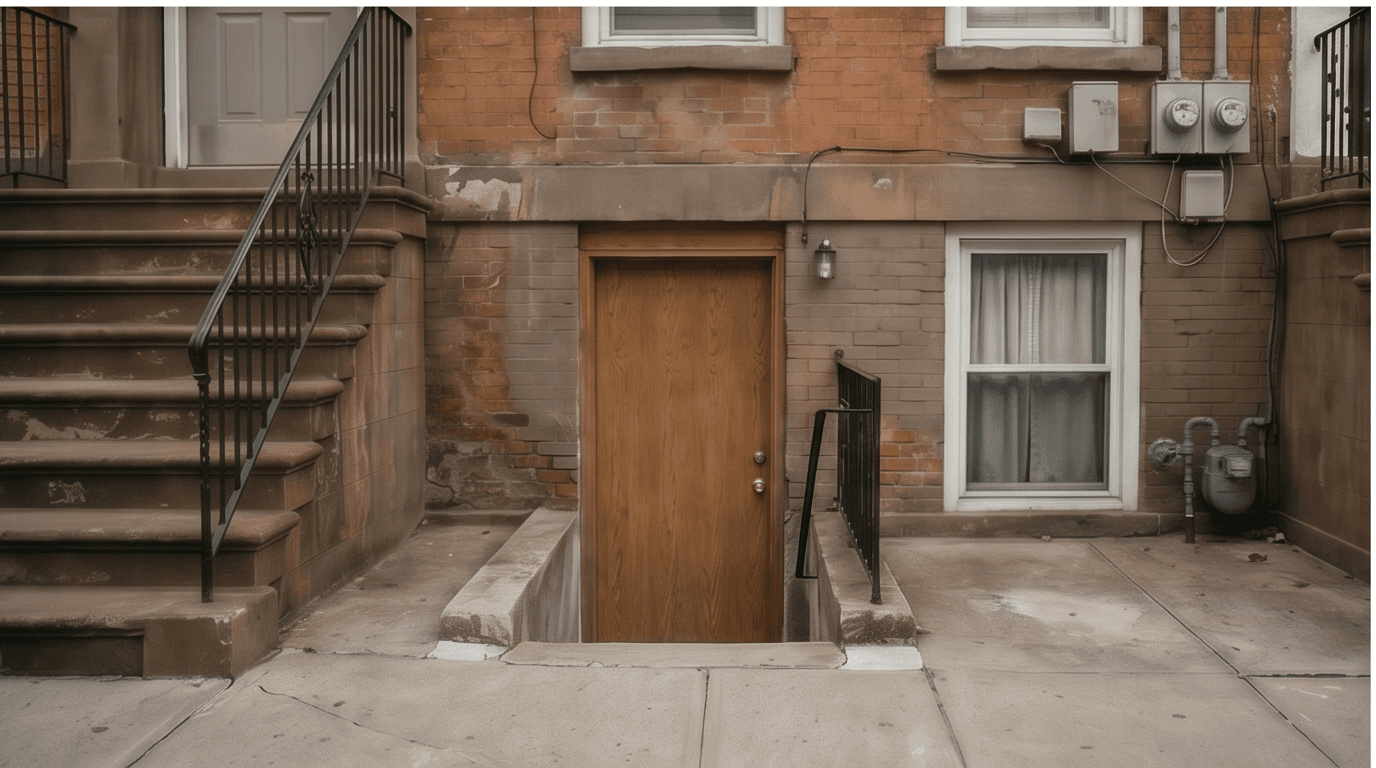
The DOB enforces the NYC Construction Codes against the current owner of record. It does not matter that a prior owner built the unit, that a listing described the home as a legal multi-family, or that you bought the property in good faith. The violation attaches to the property, and the property is now yours.
How the listing described the home can be a separate issue worth reviewing with counsel. But it does not pause the DOB clock, and it does not change who the DOB holds responsible. The immediate priority is responding to the violation correctly and on time.
What an Open Violation Actually Means
An open DOB violation is more than a fine. Left unaddressed, it can:
- Carry penalties that grow over time
- Lead to an OATH summons and an administrative hearing
- Trigger a Stop Work Order if work is being done without permits
- Result in a Vacate Order if the DOB or HPD deems the unit unsafe
- Cloud your title and complicate any future sale or refinance
If you miss the OATH hearing tied to the violation, the matter defaults: the violation is sustained at the maximum statutory penalty. You generally have 75 days from that default to file a Motion to Vacate. After that window closes, the only remedy is an Article 78 proceeding in NY Supreme Court, which is far more demanding and expensive. Ignoring the violation is the costliest path available.
Is This a DOB Problem or an HPD Problem?
It can be both. The DOB enforces the Construction Codes, which govern permits, structure, and the certificate of occupancy. The Department of Housing Preservation and Development (HPD) enforces the Housing Maintenance Code, which governs heat, repairs, and habitability. A single illegal basement apartment can generate violations from both agencies, adjudicated separately. Knowing which agency you are dealing with shapes your response.
Your Realistic Paths Forward
There is rarely a single answer. Most cases come down to three options, and the right one depends on the property and what the city is asking you to correct.
- 1Legalize the unit. If the basement can meet code, you may be able to amend the certificate of occupancy through permitted work, proper ceiling heights, egress, light, and ventilation. This is the strongest long-term outcome when it is feasible, but feasibility varies by property.
- 2Correct the condition. Where legalization is not possible, the DOB may require you to remove the unlawful features, kitchen, separate entrance, partitions, so the space is no longer a dwelling unit. A Certificate of Correction documents the fix.
- 3End the occupancy lawfully. If a tenant is living in the unit, you cannot simply ask them to leave on your own terms. An illegal unit affects a tenant's rights, and self-help, changing locks, cutting utilities, or pressuring someone out, is illegal and can create new claims against you. There is a lawful way to end the occupancy, and it should be planned with counsel.
Where to Start
Pull your certificate of occupancy and permit history, locate any violation or hearing notice, and note every deadline. Then talk to experienced NYC counsel before you respond to the DOB or to the tenant. The order in which you act matters.
For a fuller walkthrough, see our guide for homeowners who inherited an illegal basement. Nacmias Law Firm represents homeowners in DOB and OATH matters across all five boroughs.
Attorney Advertising. This article is general information, not legal advice, and does not create an attorney-client relationship.

